


Three very different hotel projects led to the same question: what are investors really buying when they choose one team to carry design into delivery?
Not the weather. Not the language. Certainly not a convenient flight itinerary.
They are in different countries, at different scales, backed by different investors and shaped by very different commercial circumstances.
Yet all three came to us looking for something remarkably similar.
They wanted a team capable of carrying much more of the project, from design and technical development through fit-out, manufacturing, FF&E, procurement and installation.
In industry language, they wanted turnkey hotel delivery.
By the third project, I stopped treating that as coincidence.
Initially, I assumed the attraction was simplicity: fewer interfaces, clearer responsibility and one team carrying more of the project. But the more I listened to what these investors were actually asking for, the more I realised they were looking for something beyond convenience.
They were looking for greater certainty between the decision they made and the asset eventually delivered.
In each case, that request came from the investors themselves, rather than the hotel management team or another designer. Their perspective was different. They were looking beyond individual design or operational decisions to the risk carried across the whole investment: programme, procurement, delivery certainty and the value of the completed asset.
Because projects rarely lose value through one spectacularly bad decision. More often, it happens through a sequence of perfectly reasonable ones.
A specified product cannot arrive in time, so a substitute is proposed. The substitute changes a detail. That affects another package. Production is waiting, so somebody makes a decision.
Then another.
Nobody announces that the design has just been compromised. Yet enough small decisions can accumulate that the room eventually built is noticeably different from the room everyone approved.
Often, nobody has done anything particularly wrong.
The risk sits in the handovers.
Every handover asks someone new to interpret the decision that came before it, and every interpretation creates a little room for drift.
That, to me, is where the real value of integration sits.
It is not how many services can be placed under one contract. It is how much of the original thinking survives the journey from design decision to completed asset.
Losing less between design and delivery
Rixos Libertas Dubrovnik is a useful example.
The project scope across our wider group included fit-out works, fixed furniture and movable furniture. The fit-outs and custom furniture for 254 guestrooms and the hotel’s general areas were completed and delivered within three months.
Three months is impressive, but the number on its own is not the lesson.
The lesson is what has to happen behind that number.
Procurement, approvals, manufacturing and logistics have to remain closely enough connected that speed does not simply become an exercise in deleting difficult details.
When the team procuring FF&E understands what the room is meant to become, a proposed substitution can be judged against more than price. When the manufacturer understands why a detail matters, the question is no longer simply Can we make this? but How can we make this efficiently while protecting what matters about it?
There is an important difference between going faster by removing quality and going faster by removing friction.
And the same delay looks very different depending on where you sit in a project.
A late specification may begin as a design issue, but it does not stay there for long. It can become a late order, then a late shipment, then an installation problem. Eventually it reaches programme, holding costs and the date the asset can begin operating.
A surprisingly small coordination problem can travel all the way to the investment model.
This is why the usual faster, cheaper, better description of integrated delivery feels inadequate to me.
The evidence is more nuanced. Turnkey and design-and-construct are not identical models, but Infrastructure NSW identifies advantages of bringing design and construction responsibility closer together, including earlier construction input, fast-tracking, reduced unforeseen constructability issues and clearer responsibility.
A study using verified data from 212 completed building projects found that design-build projects were delivered faster on average and experienced lower cost and schedule growth than the alternatives studied, while their completed unit cost was comparable with traditional design-bid-build.
That distinction matters.
The commercial value may not come from making every chair, tile or piece of joinery cheaper. It may come from discovering a problem while it is still inexpensive to change, resolving a lead-time issue while the designer can still respond intelligently, or considering manufacturing and installation before a drawing becomes an order.
These advantages are not particularly photogenic.
Neither is a six-week delay.
What happens after the drawing?
Working across both design and delivery has made me see something I did not fully appreciate when looking at projects primarily through design: what happens to a design decision after it leaves the drawing.
This becomes particularly obvious in prefabrication.
A render never has to calculate whether a road can carry it.
A prefabricated module does.
Turning a room into a module is not simply a matter of drawing the same architecture inside a box. Suddenly there is a considerable amount of mathematics behind what appears on the screen: overall dimensions and weight, structural loads, lifting points, transport restrictions, crane capacity, installation sequence and the tolerances required when components finally meet on site.
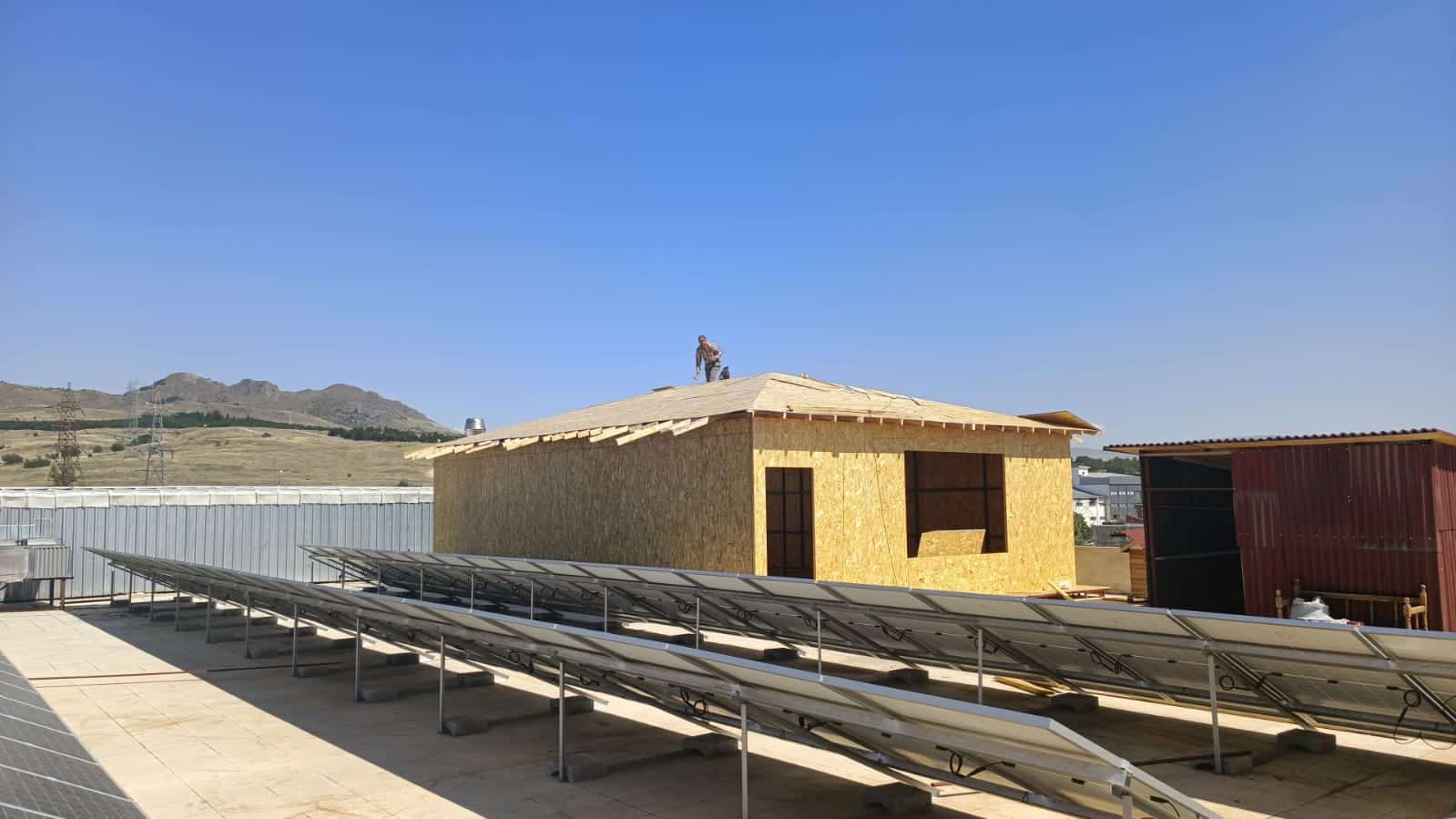
The beautiful line on the drawing still matters. But now it also has to survive gravity, manufacturing, a truck, a crane and a construction site.
That changes the design conversation.
It does not make design less important. If anything, it asks more of it.
A design is not fully resolved simply because it works visually. Its manufacturing, procurement and delivery assumptions also need to be tested.
This is why mock-ups can be so revealing.
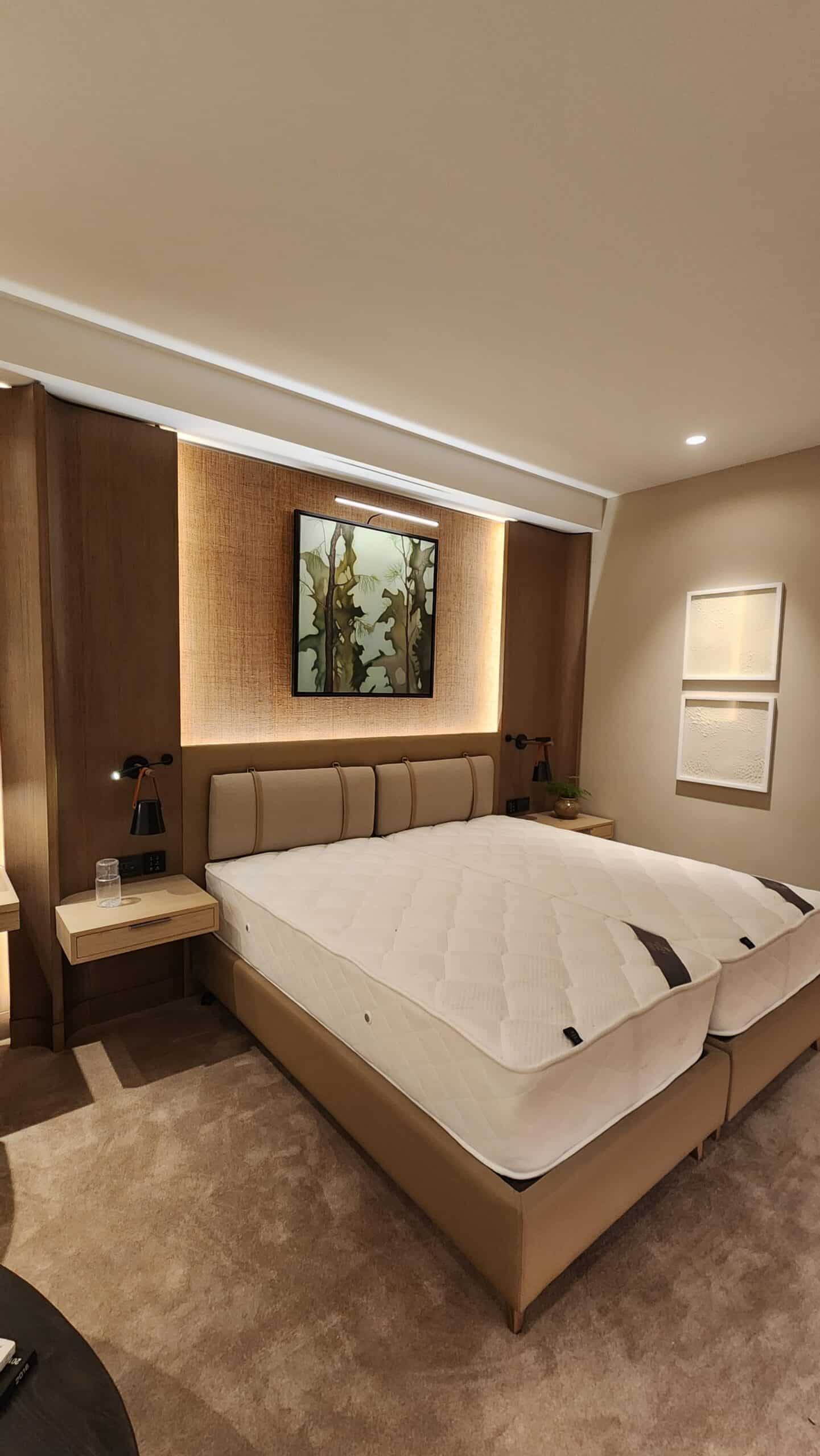
A full-scale hotel room forces assumptions into physical reality. Someone sits on the bed. The reading light is switched on. The joinery opens. A suitcase is put where the drawing says it should fit.
A centimetre that looked irrelevant on screen suddenly matters. A beautiful detail that works perfectly once may become unnecessarily complicated when repeated 200 times.
Discovering that in the mock-up is useful.
Discovering it in room 137 is expensive.
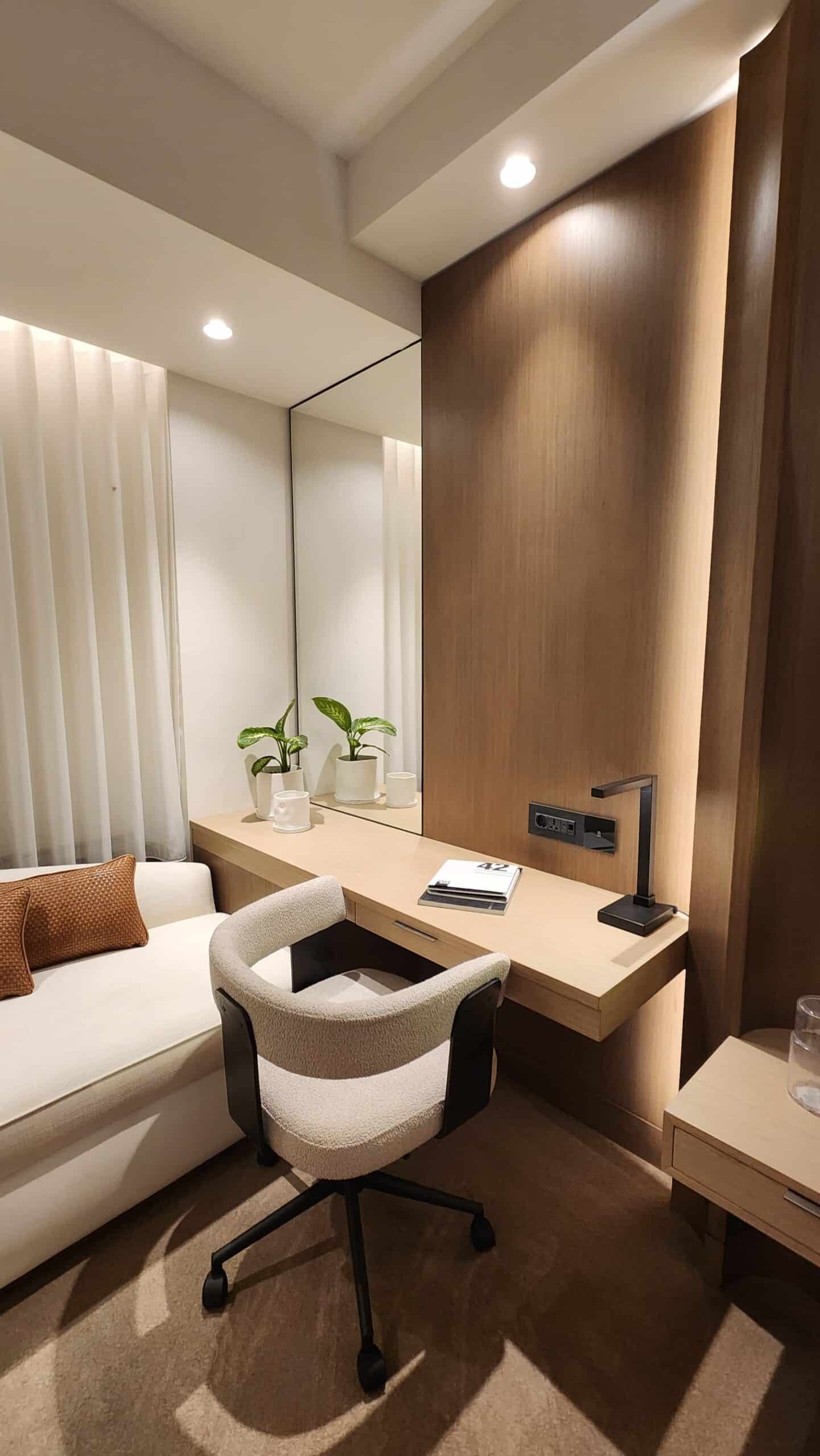
Perhaps that is the clearest way I can describe the value of one team.
Not fewer experts.
Fewer gaps between them.
Anyone who has spent enough time around construction will recognise the sentence that often appears when one of those gaps is found:
“That isn’t in our scope.”
Sometimes it is contractually correct.
Unfortunately, the problem remains in the building.
Integration cannot make problems disappear. What it can do, when it works well, is reduce the amount of time spent determining which contractual boundary a problem belongs to before somebody starts resolving it.
Integration also amplifies what is already there
There is an important counterargument.
Integration concentrates responsibility, which means capability matters enormously.
A highly coordinated delivery system can carry a strong design consistently through hundreds of rooms. It can also repeat a weak decision with remarkable efficiency.
Australian architecture regulators have raised a related concern in design-and-construct procurement. Their 2024 Deep Dive Report found that shifting responsibility and control of design delivery away from architects, particularly when combined with high-level documentation and limited site involvement, can compromise the ability to maintain design quality through construction.
So integration should not mean design becoming subordinate to delivery.
Its best version is when each discipline understands enough about the others to make better decisions.
The designer understands manufacturing constraints.
The manufacturer understands why the detail matters.
Procurement understands what can be substituted and what should be protected.
The delivery team understands the experience the design is trying to create.
And the client has clarity about who owns the outcome when those realities meet.
That is why the label turnkey itself tells a client surprisingly little.
More useful questions are: When does manufacturing enter the design conversation? How are substitutions assessed? Who reviews the shop drawings? Are prototypes or mock-ups built before repetition begins? What is manufactured directly and what is subcontracted? How is quality checked before products reach site?
And perhaps the most useful question is:
When a decision crosses design, procurement, manufacturing and site, who owns the outcome?
That brings me back to Georgia, Utrecht and Venezuela.
Three projects with very little in common on the surface. Three different investors who came to us independently.
Initially, I thought they were looking for convenience.
Now I think they were looking at the distance between an investment decision and a completed asset and asking how much could be lost along the way.
How many handovers? How many interpretations? How many opportunities for something carefully considered at the beginning to drift before completion?
Design still matters enormously. In fact, integrated delivery makes strong design even more important because integration amplifies whatever sits at its centre.
But good design only creates its full value if it survives delivery.
Perhaps that is what these three projects were really telling us.
The investors were not buying a longer list of services from one company.
They were buying a shorter distance between the project they agreed to fund and the one they would eventually walk into.
Turnkey hotel delivery: questions investors ask
What is turnkey hotel delivery?
Turnkey hotel delivery means one team carries the project from design and technical development through fit-out, manufacturing, FF&E, procurement and installation. Its value is not how many services sit under one contract but how much of the original design thinking survives the journey from design decision to completed asset.
Where does a hotel project lose value between design and delivery?
Rarely through one bad decision. More often through a sequence of reasonable ones made at handovers: a specified product cannot arrive in time, a substitute changes a detail, that affects another package, and production is waiting. Every handover asks someone new to interpret the decision before it, which leaves room for drift between the room approved and the room built, which is the gap integrated delivery is meant to close.
Is design-build faster than traditional design-bid-build?
On average, yes. Franz, Molenaar and Roberts (2020), using verified data from 212 completed building projects, found design-build projects were delivered faster with lower cost and schedule growth than the alternatives studied, while completed unit cost was comparable with design-bid-build. Turnkey and design-build are not identical models, so the finding indicates the direction rather than proving it for every hotel.
Why build a mock-up room before hotel furniture goes into production?
Because a full-scale mock-up room forces assumptions into physical reality. Someone sits on the bed, switches on the reading light, opens the joinery and puts a suitcase where the drawing says it fits. A centimetre or a detail that is complicated to repeat 200 times is cheap to fix in the mock-up and expensive to fix in room 137.
What is the risk of integrated delivery on a hotel project?
Integration concentrates responsibility, so capability matters. A coordinated system can carry a strong design through hundreds of rooms, and it can repeat a weak decision just as efficiently. The 2024 Deep Dive Report by the NSW and Victorian architects registration boards found that moving control of design away from architects in design-and-construct procurement can compromise design quality through construction.
What should a hotel investor ask a team offering turnkey hotel delivery?
When does manufacturing enter the design conversation? How are substitutions assessed? Who reviews the shop drawings? Are prototypes or mock-ups built before repetition begins? What is manufactured directly and what is subcontracted? How is quality checked before products reach site? Above all: when a decision crosses design, procurement, manufacturing and site, who owns the outcome?
About the author
Ozge Fettahlioglu is the founder of Cocoplum Design Studio in Hunters Hill, Sydney, and works with its manufacturing arm Boxareno on turnkey hotel delivery: design, prototype room, fixed and loose furniture, FF&E, delivery and installation under one contract. The team has designed and produced 33+ hotel and resort projects in 15 countries, documented in the case studies, including Hotel Alba Caracas. She is a neuroarchitect, a lecturer at Western Sydney University and a member of the Academy of Neuroscience for Architecture. For how design control is kept inside one contract, read How Do You Keep Design Control When One Team Designs and Manufactures the FF&E?
References
- Franz, B., Molenaar, K.R. & Roberts, B.A.M. (2020), ‘Revisiting Project Delivery System Performance from 1998 to 2018’, Journal of Construction Engineering and Management, 146(9). doi:10.1061/(ASCE)CO.1943-7862.0001896
- Infrastructure NSW / NSW Construction Leadership Group, Procurement Methods Guidelines.
- NSW Architects Registration Board & Architects Registration Board of Victoria (2024), Deep Dive Report into Systemic Risks in the Australian Architecture Sector.
